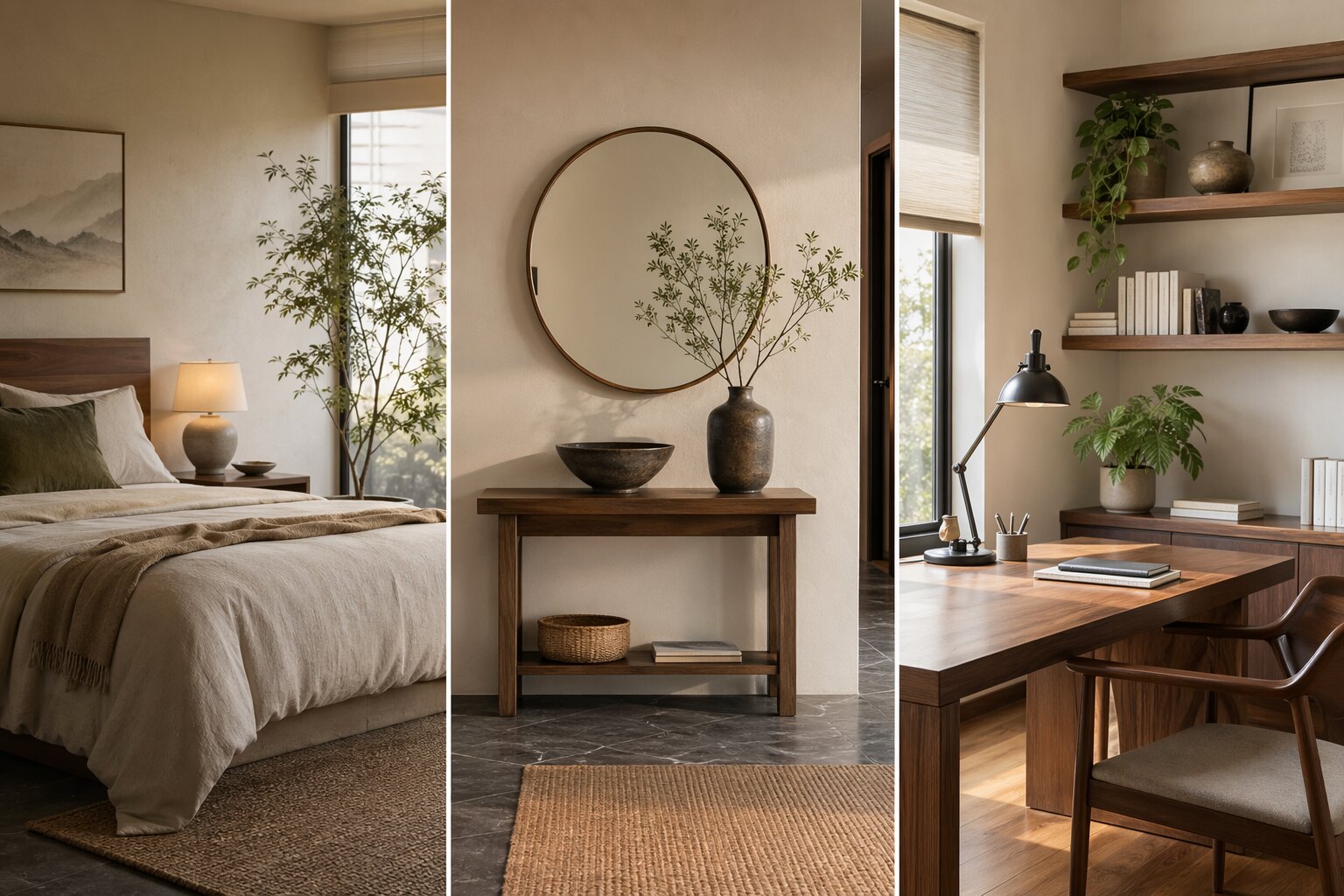
Why apply the Five Elements room by room?
A home does not need one single energy everywhere. Different rooms ask for different behavior. A bedroom asks for recovery. A workspace asks for focus. A kitchen asks for nourishment and rhythm. An entryway asks for order and transition. The Five Elements help you shape each room around its real purpose.
This room-by-room approach is especially useful because it keeps the system practical. You are not trying to make your whole home look like one style. You are helping each space do its job with more ease.
Bedroom: Earth and Water first
The bedroom usually benefits from Earth and Water. Earth makes the room feel safe, settled, and held. Water helps the body slow down and recover. This can look like softer bedding, warmer neutral colors, dim lamps, rounded forms, natural fabrics, and fewer sharp visual distractions.
Fire can still appear in a bedroom, but it should be controlled. A small warm lamp is usually better than harsh overhead light. Strong red walls, too many screens, and highly stimulating art may make the room feel awake when it should feel restorative.
Living room: Earth for comfort, Fire for warmth
A living room is often a social and emotional center, so it needs comfort and presence. Earth can come through rugs, cushions, low tables, ceramics, warm neutrals, and furniture that makes people want to sit. Fire can come through warm light, art, candles, or a small accent color that gives the room life.
If a living room feels too flat, add a little Fire. If it feels chaotic, increase Earth and reduce visual noise. The best living rooms do not just look styled; they make people feel invited.
Entryway: Metal and Earth for a cleaner transition
The entryway is where outside energy meets the home. If it is cluttered, the entire home can feel more scattered. Metal is useful here because it supports order, boundaries, and clarity. Earth helps the space feel grounded instead of clinical.
Try a simple landing tray, a closed shoe solution, one clear mirror, and one grounding object such as a small ceramic bowl or textured mat. The goal is not perfection. The goal is a reliable transition from outside pace to home rhythm.
Workspace: Metal for focus, Wood for growth
A workspace needs clean decision energy. Metal helps by reducing clutter and creating visual order. Wood helps by keeping the space active, learning-oriented, and flexible. This combination is useful for people who need both discipline and momentum.
A focused workspace might include a clear desk edge, task lighting, one plant, vertical storage, and fewer decorative objects in the direct line of sight. If the space feels too cold, add a touch of Fire through warm light or one energizing image.
Kitchen and dining: Fire, Earth, and rhythm
Kitchens naturally carry Fire because of heat, cooking, and activity. They also need Earth because food is nourishment. If a kitchen feels frantic, add Earth through practical organization, heavier textures, soft mats, and calmer surfaces. If it feels dull and unused, add Fire through better lighting, cleaner counters, and small warm accents.
Dining spaces benefit from Earth and Fire together: comfort plus connection. A table that feels stable, lighting that feels warm, and enough space around the chairs can change how people gather.
FAQ
Which room should I adjust first?
Start with the room that affects your daily rhythm most. For many people, that is the bedroom, workspace, or entryway.
Can one item represent more than one element?
Yes. A ceramic lamp with warm light may carry Earth and Fire. A dark round mirror may carry Water and Metal. The combined feeling matters more than a rigid label.
Is this the same as feng shui?
It overlaps with feng shui, but this article focuses on a simple Five Elements lens for everyday home choices, not a full classical audit.
Your environment works best when it fits your rhythm. Try a free FateRune preview to understand the personal patterns you keep bringing into your rooms, relationships, and work.
Start your free preview